SOLUTION The frontal lobe introduction to psychology Biology Diagrams
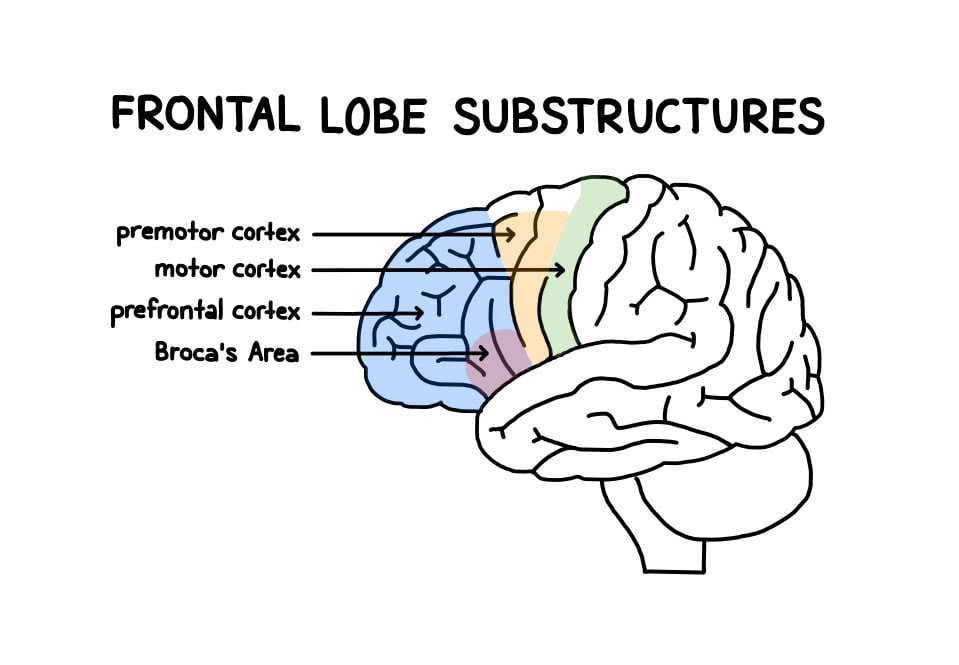
SOLUTION The frontal lobe introduction to psychology Biology Diagrams and how lesions of the frontal lobes may present symptomatically within each functional area, and conclude with an overview of neuropsychological assessment for frontal lobe functions. Fig. 10.2 Mesial view of the frontal lobe including primary motor, supplementary motor, micturation center, and prefrontal cortex/anterior cingulate

The Frontal Lobe's Fantastic Functions: More Than Just a Pretty Face. Now that we've got a handle on the frontal lobe's structure, let's dive into its functions. Buckle up, folks - this is where things get really interesting! First up on our tour of frontal lobe functions is the star of the show: executive functions.
Frontal Lobe: What It Is, Function, Location & Damage Biology Diagrams
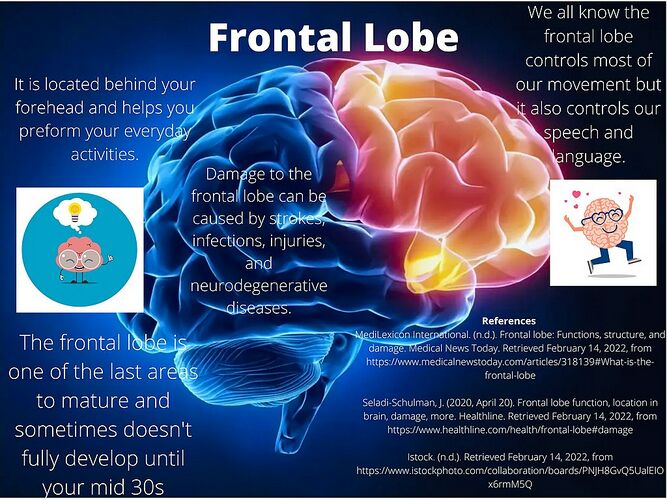
Learn about the frontal lobe, the largest and most complex part of your brain. It controls voluntary movements, speech, reasoning, planning, and impulse control. Find out what happens when it's damaged and how to treat it.
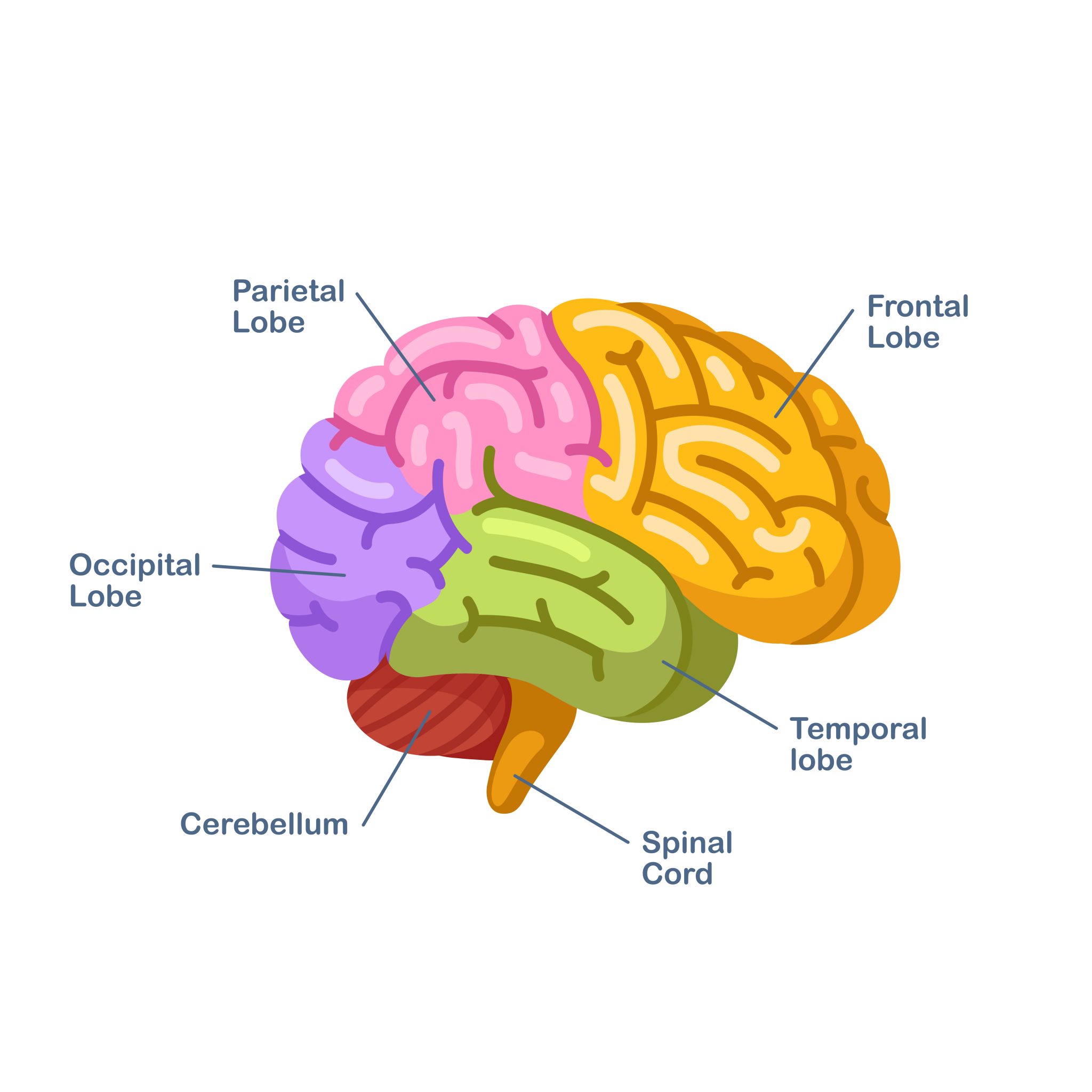
Learn about the frontal lobe, the forward-most part of your brain that controls many abilities, such as reasoning, social understanding, executive functions and voluntary movements. Find out what conditions and disorders can affect the frontal lobe and how to keep it healthy.

PDF Chapter 10 Frontal Lobe/Executive Functioning Biology Diagrams
The frontal lobe is a vital part of the brain that controls speech, memory, personality, and more. Learn about its location, roles, and how damage can affect it.

Learn about the frontal lobe, the largest lobe of the brain, located in the anterior aspect of the cranial cavity. It is involved in higher cognitive functions, such as decision making, planning, speech production and voluntary movement. The frontal lobe is the brain's largest region, involved in higher cognitive functions, such as planning, problem-solving, language, and emotion. Learn about its substructures, how damage affects them, and how to diagnose and treat the symptoms.