The cross section of the cactus looks very similar Biology Diagrams
The cross section of the cactus looks very similar Biology Diagrams A food chain is a straight or linear energy flow from one organism to another. Each species or organism is allocated a trophic level. For example, the primary producers or plants are at trophic level 1, while predators are at either trophic level 4 or 5. As such, a food web combines many different food chains.

Study the diagram of a desert food chain What would most likely happen if the kangaroo rats were killed off and removed from the food chain? The number of snakes would increase. Cactus The number of cactus plants would increase. The number of foxes would be unaffected. Kangaroo ral The number of cactus plants would be unaffected. Snake Fox

Sonoran Desert Food Web Biology Diagrams
The food chain starts with producers and ends with decomposers. A food chain diagram shows how energy passes within an ecosystem through organisms eating and being eaten. The diagram of the food chain class 6 and 7 is an important topic in the biology syllabus and is often asked in the examinations. The food chain diagram with labels is given
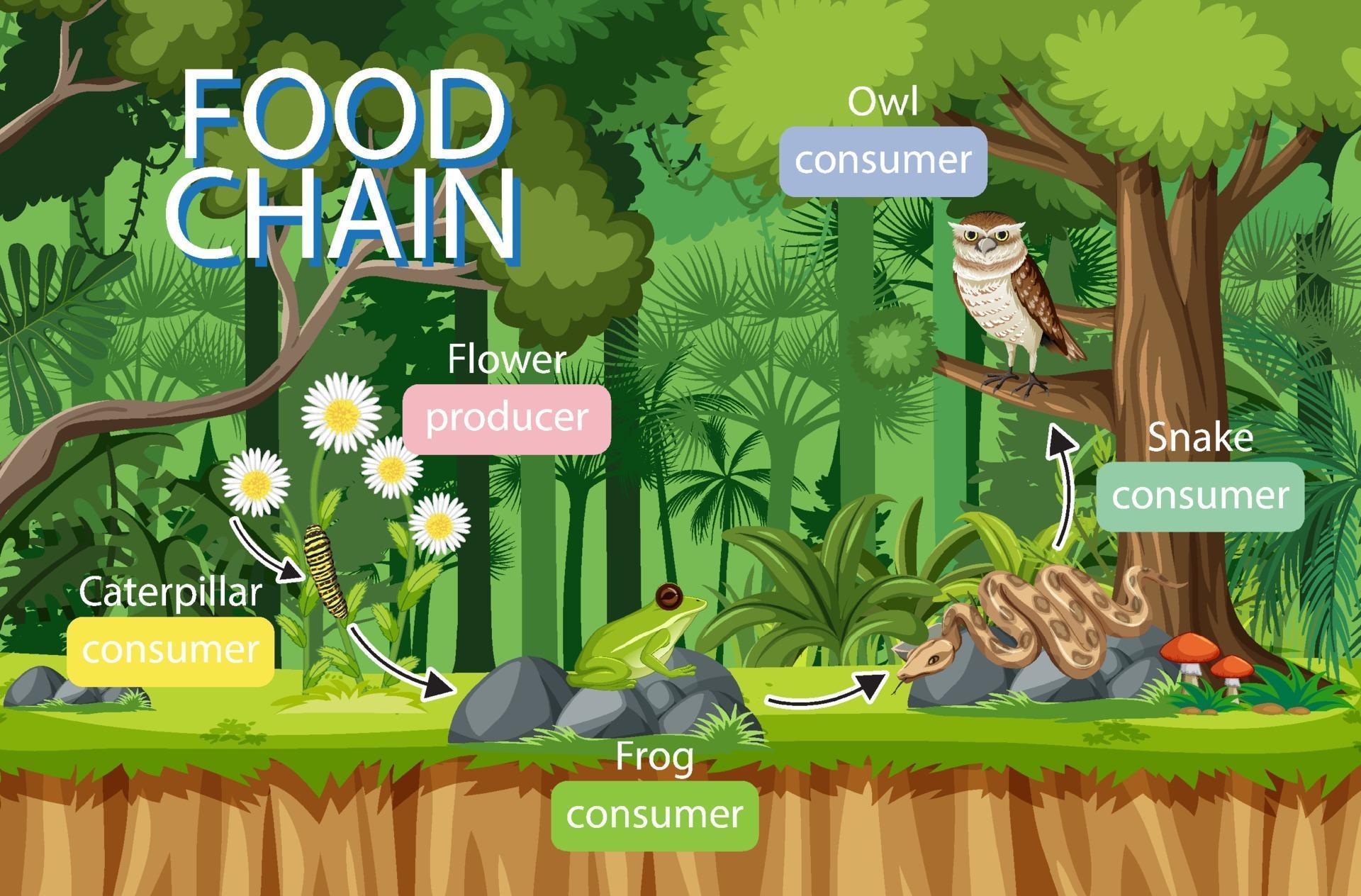
The desert food chain is a diagram showing the transfer of energy between organisms in the desert biome. In the desert, the antelope squirrel eats the prickly pear cactus; insects like red In a rainforest food chain, caterpillars and butterflies eat orchid plants. Toucans eat the caterpillars and butterflies. Study the diagram of a desert food chain. (Image of desert food chain) What would most likely happen if the kangaroo rats were killed off and removed from the food chain? B The number of cactus plants would increase.

Mastering the Art of Food Chain Diagrams Biology Diagrams
Cactus -> Desert Mouse -> Rattlesnake -> Coyote: Conclusion. Creating a food chain diagram is not only an invaluable skill but also a fascinating way to explore the relationships between organisms within an ecosystem. By understanding and visualizing these connections, you gain a deeper appreciation for the delicate balance of nature and the

This is a Sonoran Desert Food Web.See if you can identify all the parts of the food web that make this a functioning, healthy ecosystem. Look for: The Producers - the cacti, shrubs and plants.. The Primary Consumers - the kangaroo rat, cactus mouse, lizards, poorwill, and desert tortoise.. The Secondary Consumers - the kit fox, elf owl, redtailed hawk, scorpion, roadrunner, and rattlesnake. The diagram shows how mercury can accumulate in the food chain. In the sea, tiny animals and plants called plankton absorb the mercury compounds. When the plankton are eaten by small fish, the Grazing Food Chain: Energy flow starts with green plants, which are consumed by herbivores, followed by carnivores. Common in terrestrial ecosystems. Detritus Food Chain: Energy flow begins with dead organic matter broken down by decomposers, then consumed by detritivores. Common in decomposition processes. Parasitic Food Chain
